

Collaboration between industry and the University of Limerick key to Mid-West region’s success…Shannon Chamber luncheon hears
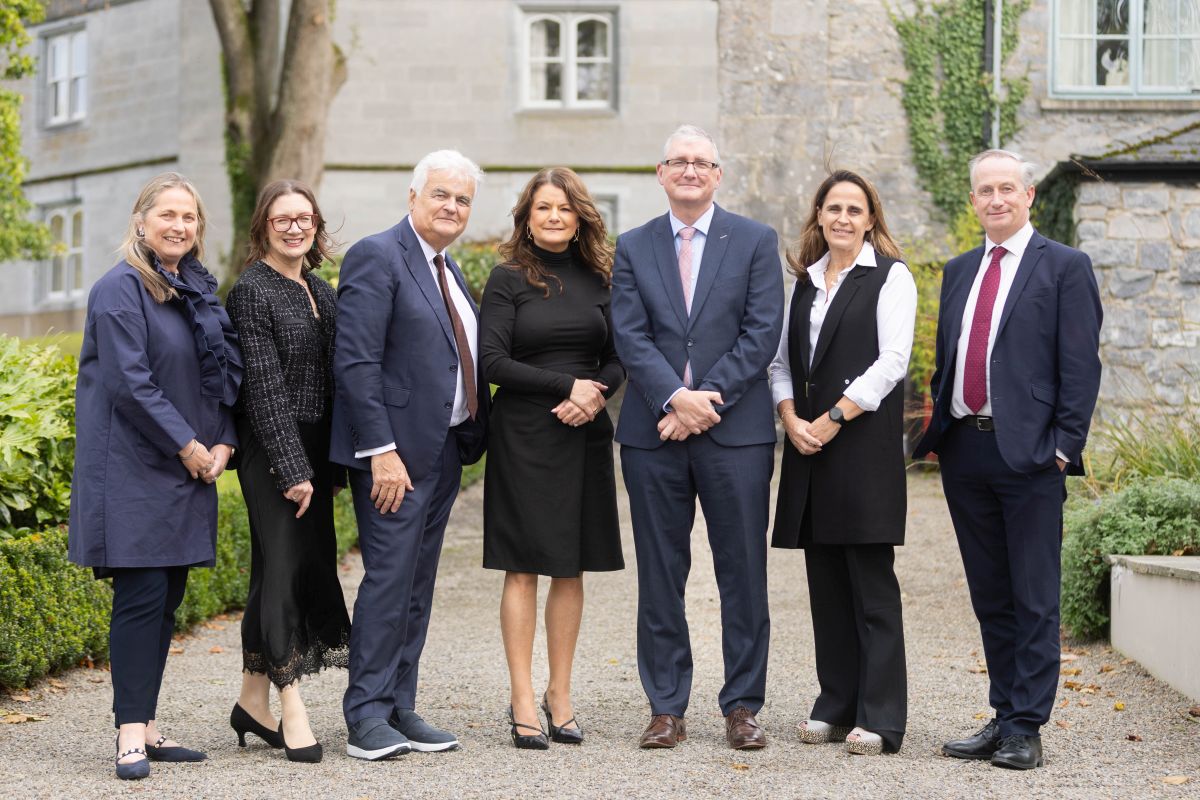
Professor Shane Kilcommins, President, University of Limerick (3rd right) keynote speaker at the Shannon Chamber luncheon, pictured with (from left): Siobhán Duffy, CEO, Element Six; Marie Power, head of leadership development, Uppercut; Mark Nolan, President and Helen Downes, CEO, Shannon Chamber; Orlaith Lawler, VP Operations, Europe and APAC, Beckman Coulter; and Leo Clancy, CEO, Ei Electronics. Photograph by Eamon Ward
The greatest strength of the Mid-West region has never been its buildings, its infrastructure or even its industries. Its greatest strength has always been its people, who are willing to collaborate, to innovate, to lead and to shape what comes next.
This was one of the key messages delivered by Professor Shane Kilcommins, President of the University of Limerick (UL), when he addressed a Shannon Chamber business luncheon held in Dromoland Castle Hotel on Thursday, 29 October, outlining his vision for strengthening the relationship between the university and enterprise.
Recalling UL’s growth from just over 100 students in 1972, when founded as the National Institute for Higher Education, to a university community today of more than 21,000 students, over 140,000 alumni worldwide and partnerships with some 4,000 employers, Professor Kilcommins said that a key lesson from the UL story is that connectivity creates value.
“When universities operate in isolation, knowledge can remain confined to journals, laboratories and lecture theatres. When enterprise operates in isolation, innovation can be constrained by the limits of existing perspectives and capabilities. But, when knowledge and enterprise connect, something extraordinary happens. Research becomes innovation, learning becomes opportunity, ideas become businesses and talent becomes regional prosperity,” he said
“Continued collaboration between industry and universities will be critical to developing the talent, research capability and innovation needed to sustain the Mid-West’s competitiveness in an increasingly challenging global economy. That is why businesses need to become more directly involved in shaping university curricula, in identifying emerging skills requirements, in supporting research and creating flexible learning opportunities throughout people’s careers,” he added.
Pointing to the impact of artificial intelligence, climate transition, geopolitical uncertainty, and changing labour markets, Professor Kilcommins said that a new model of partnership between universities and employers is now essential.
“For our part, we will significantly strengthen our research and innovation activity while deepening partnerships with industry, healthcare, government and community. This will be outlined in the University’s forthcoming Strategic Plan 2027 – 2031, provisionally titled Shaping What’s Next,” he added.
Welcoming Professor Kilcommins’ commitment to closer collaboration, Shannon Chamber President, Mark Nolan said that access to talent, research expertise and innovation is critical to the success of the Chamber’s 350 member companies.
Mr Nolan pointed to the Chamber’s longstanding relationship with UL, including its MBA scholarship partnership with the Kemmy Business School and collaboration through Shannon Chamber Skillnet on programmes supporting digital skills and technological change. He also referenced plans to collaborate on the delivery of a Level 9 micro-credential programme on risk, ethics, governance and artificial intelligence.
“These partnerships demonstrate what can be achieved when education and enterprise work together. The challenge now is to build on that foundation and ensure that the knowledge and innovation generated within our universities translate into real economic and societal benefits”, he added.
The luncheon also featured a panel discussion involving Professor Kilcommins; Leo Clancy, CEO, Ei Electronics; Orlaith Lawler, VP Operations for Europe and APAC, Beckman Coulter; and Siobhán Duffy, CEO, Element Six. Moderated by Marie Power, head of leadership development at Uppercut, the discussion highlighted several practical examples of how collaboration between universities and industry is delivering tangible benefits for businesses. These ranged from specialist research that solved a costly manufacturing issue within days to accredited programmes that encouraged employees to return to education and upskill.
The panellists also explored how artificial intelligence is changing workforce skills requirements and highlighted the importance of equipping graduates with commercial awareness, critical thinking, adaptability, and practical industry experience. They emphasised the value of industry placements, micro-credentials, and tailored professional qualifications in addressing these needs.
To take this to the next step, Professor Kilcommins offered to bring UL’s four faculty deans together with Shannon Chamber member companies to identify new opportunities for research, skills’ development and industry engagement.
Welcoming the offer and confirming that Shannon Chamber would facilitate this meeting, CEO Helen Downes said that the region’s strong graduate retention rate demonstrated the value of opportunities being created by employers.
“The fact that the mid-west region has a 65% graduate retention rate is a strong endorsement of the region’s enterprise base and the opportunities available to graduates. As Professor Kilcommins said, companies play a key role in retaining this talent through offering excellent career opportunities.
“Bringing UL’s four faculty deans together with our member companies is a practical next step in identifying where university expertise can support business needs and where industry can help shape future skills and research priorities. We look forward to the outcome of this process,” Ms Downes concluded.
The Shannon Chamber luncheon, titled ‘Connecting Knowledge and Enterprise’, was co-sponsored by Eli Lilly, Magellan Group, Zimmer Biomet, Shannon Chamber Skillnet and Clare County Council.
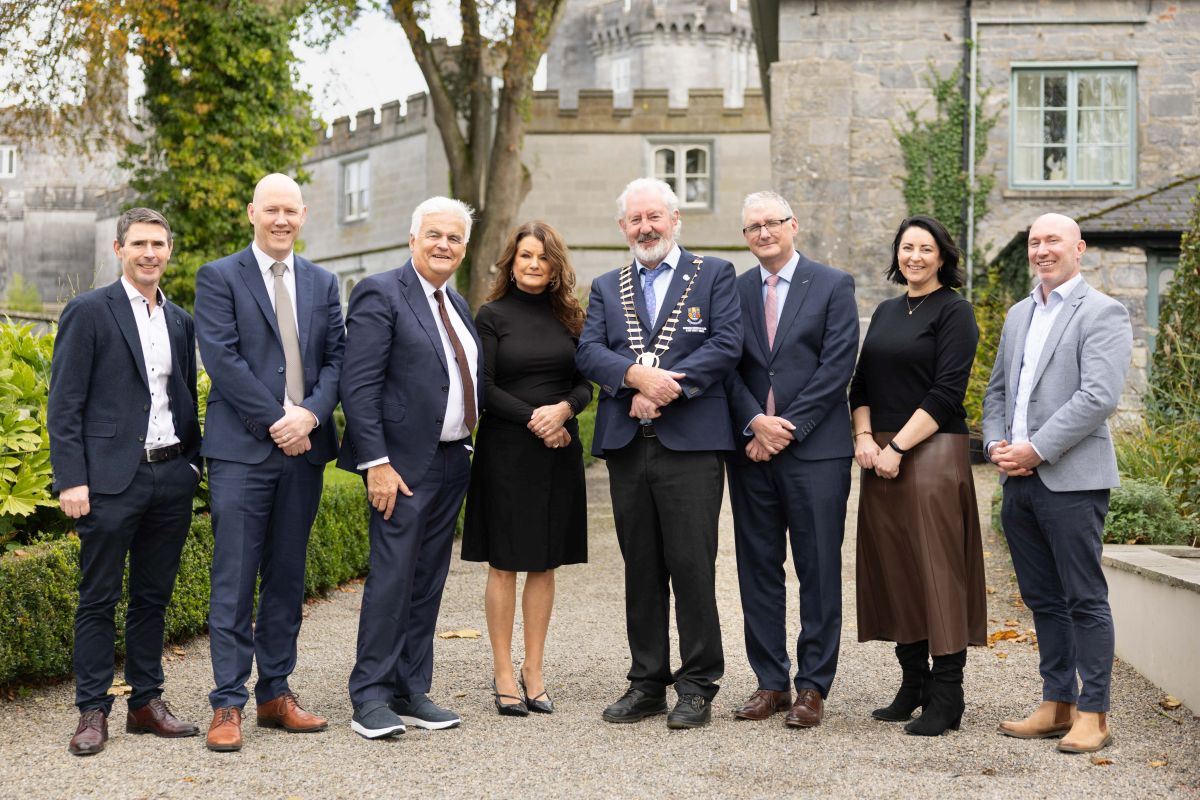
Cathaoirleach of Clare County Council, Councillor Joe Killeen,pictured with (from left): Donnacha Dowling, CFO, Magellan Group; Gordon Daly, CEO, Clare County Council; Mark Nolan, President and Helen Downes, CEO, Shannon Chamber; Professor Shannon Kilcommins, President, University of Limerick; Zita O’Rourke, senior HR director, Magellan Group; and Tom O’Carroll, director manufacturing, Ireland, Zimmer Biomet. Photo by Eamon Ward.