

Employers urged to prepare for changing employee benefits and pay landscape
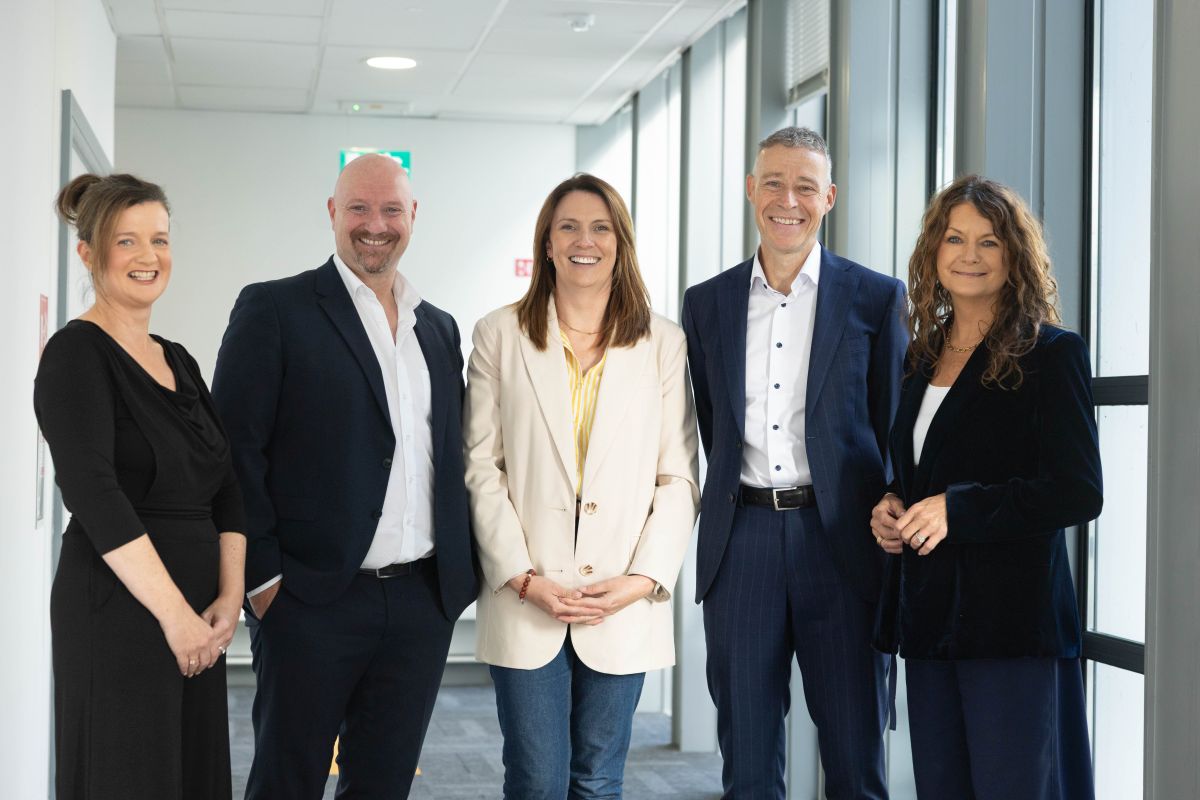
Pictured at the employee benefits and pay seminar (from left): Gráinne Moran and Patrick Brennan, NFP; Trish McSweeney, Microchip, Ennis; Philip Brennan, NFP; and Helen Downes, CEO, Shannon Chamber. Photograph by Eamon Ward
Auto-enrolment, healthcare benefits and pay transparency are reshaping how companies attract, retain and reward employees, Shannon Chamber seminar hears
Employers need to take a more strategic approach to pensions, healthcare and pay as they affect an organisation’s ability to attract and retain talent, manage costs, remain compliant and demonstrate good governance. And, with a series of changes in the employee benefits landscape on the horizon, this will place greater focus on the overall value proposition offered to employees.
That was one of the key messages delivered at a recent Shannon Chamber seminar, delivered by NFP, an Aon company, which examined three increasingly important areas for employers: pension auto-enrolment, employee healthcare benefits and the forthcoming EU Pay Transparency requirements.
Seminar presenters included Philip Brennan, director of employee benefits and wealth, a senior advisor working with employers on pension strategy, retirement planning and regulatory development; Patrick Brennan, head of health and wellbeing strategy, who leads advisory services for corporate clients in Ireland across health insurance, wellbeing strategy and broader employee benefits; and Gráinne Moran, senior HR consultant, NFP.
They highlighted the fact that, while each of their speciality areas present different challenges for organisations, collectively they are changing how employers need to think about remuneration and benefits, with greater emphasis being placed on total reward, transparency, employee communication and competitiveness in the labour market.
Philip Brennan said that with regards to pensions, this moving from pension coverage to pension adequacy
“The introduction of pension auto-enrolment represents a major change in Ireland’s pensions landscape and brings pension provision into sharper focus for employers and employees alike. The conversation needs to move beyond simply increasing pension coverage towards ensuring that employees are making adequate provision for retirement,” he stated.
Employers with existing defined contribution schemes also need to consider how their current pension arrangements compare with auto-enrolment and determine the most appropriate approach for their workforce. Differences in contribution structures, flexibility and benefits mean that organisations need to carefully assess their pension strategy rather than view auto-enrolment simply as a compliance exercise.
Employee communication was also identified as critical. With many people having had little or no individual pension guidance, employers were encouraged to provide education and support to help employees understand both their existing pension arrangements and the implications of auto-enrolment.
Patrick Brennan said that healthcare benefits are becoming increasingly important in attracting and retaining talent.
He outlined the changing role of private health insurance within employee benefits packages. Against a backdrop of increasing healthcare expenditure and significant pressure on access to public healthcare services, private health insurance continues to be highly valued by employees. Almost half of the Irish population now has private health insurance, while the range of benefits available through policies has expanded significantly.
“What was once primarily viewed by employers as a means of reducing absenteeism has developed into a much broader recruitment and retention tool,” he added.
Modern corporate healthcare plans can now encompass services ranging from online GP appointments, robust reimbursements for in-person GP and consultant visits, to preventative screening, fertility supports, employee assistance programmes, menopause supports and other wellbeing benefits.
Employers were advised that choosing an appropriate healthcare offering requires an understanding of their own workforce, including demographics, family structures, age profiles, international employees and recruitment pressures, rather than adopting a one-size-fits-all approach.
Gráinne Moran said that pay transparency is set to bring another significant change for employers.
“The EU Pay Transparency Directive will introduce increased obligations around how employers communicate pay during recruitment and how employees can access information on pay levels and progression,” she said.
“These changes include requirements around providing clear salary information to job applicants, restrictions on asking candidates about previous salary history, greater transparency around pay progression and employees’ ability to request information on pay levels for comparable roles.”
She said that employers should begin preparing now by reviewing job structures, benchmarking salaries and benefits, examining pay progression policies and ensuring that objective criteria are consistently applied across comparable roles.
A further consequence of increased pay transparency will be the need for businesses to communicate the full value of employment packages more effectively.
Salary alone does not represent an employee’s total reward. Pension contributions, healthcare, income protection, employee assistance programmes and other benefits can represent significant additional value and should form part of how organisations communicate their overall employee proposition.
“Training for managers and close cooperation between HR, finance and payroll will also be important in preparing organisations for the changes,” she advised
Seminar attendee Trish McSweeney, principal compensation and benefits analyst with Microchip, Ennis said that sharing information and hearing how companies in other sectors approach human resources issues are some of the many benefits of attending an event of this nature.
Commenting on the seminar, Shannon Chamber CEO Helen Downes said: “Employers are operating in an increasingly competitive environment when it comes to attracting and retaining people. What this seminar demonstrated very clearly is that pensions, healthcare and pay can no longer be looked at in isolation.
“Auto-enrolment is bringing pensions to the forefront, employees are placing greater value on healthcare and wider benefits and pay transparency will require employers to be much clearer about how pay is determined and progresses within their organisations.
“The common thread running through all three areas is the importance of preparation and communication. Employers need to understand what they currently offer, identify where changes may be required and, importantly, ensure that employees understand the full value of the reward and benefits package available to them.”