

Shannon Chamber welcomes Budget 2027 business and skills measures but calls for greater clarity on regional infrastructure investment
Shannon Chamber welcomes a number of measures announced in Budget 2027 aimed at supporting enterprise, easing business costs and strengthening Ireland’s competitiveness, particularly the increased investment in workforce skills development, but highlights the need for greater clarity on Government investment in strategic infrastructure to support economic growth in Shannon and the wider Mid-West.
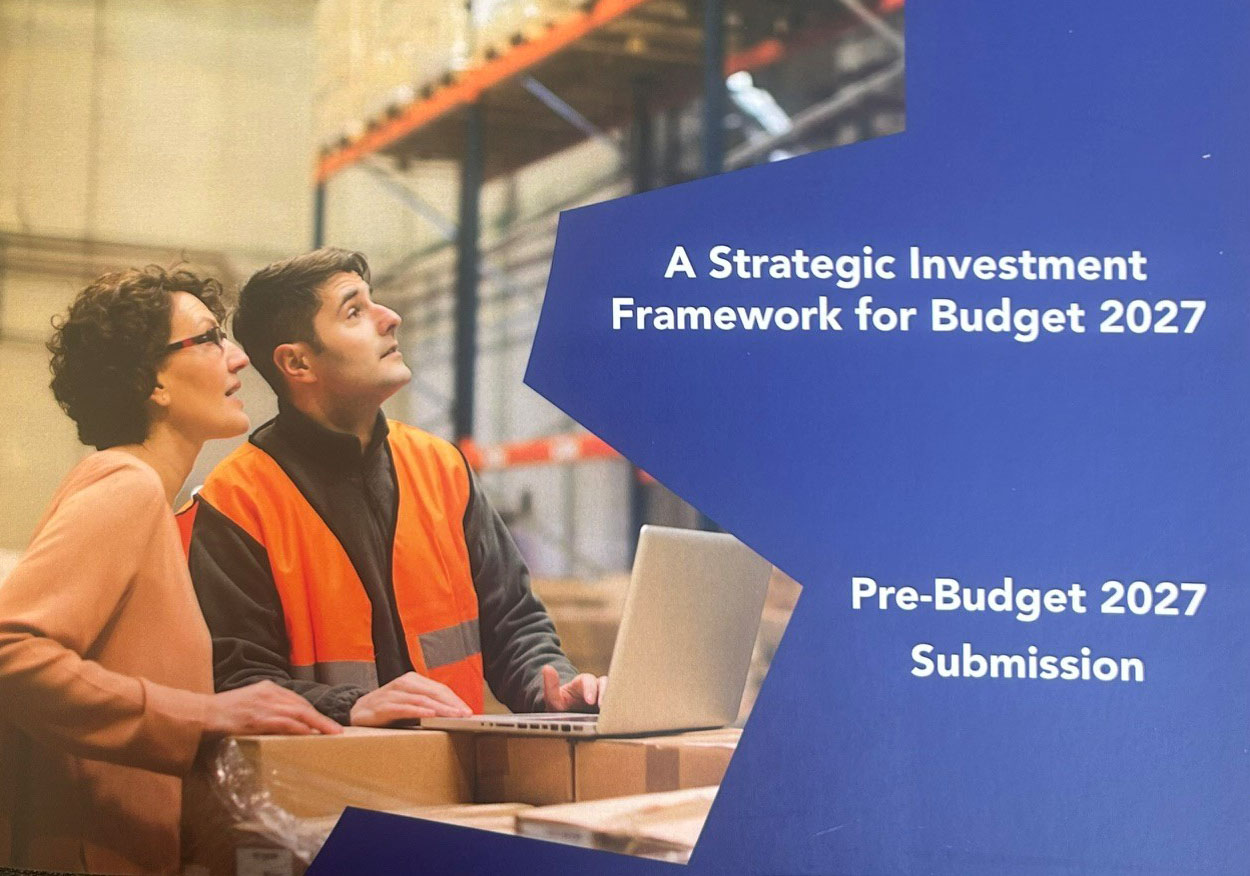
While a number of the national taxation and enterprise priorities included in the Chamber’s comprehensive range of recommendations in its pre-Budget 2027 Submission to Government, set out under the three pillars of Connected Places, Competitive Economy and Future Growth, have been addressed, important regional investment requirements remain to be clarified.
Commenting on the Budget, Shannon Chamber CEO Helen Downes said: “We welcome the Government’s recognition of the need to support businesses, employees and entrepreneurs in an increasingly challenging operating environment. Measures such as the increase in the standard rate income tax band, enhancements to R&D tax incentives, changes to preliminary corporation tax arrangements and the adjustment to employer PRSI thresholds are positive developments.
“These measures will provide some relief to businesses and employees and support companies in their efforts to remain competitive, invest in innovation and pursue opportunities for growth.
“However, it is important that Government recognises the cumulative cost pressures facing businesses, particularly SMEs. While the adjustment to the employer PRSI threshold is welcome, businesses are also preparing for a further increase in the national minimum wage to €14.94 per hour in January 2027, alongside other employment-related costs and regulatory requirements.
“Supporting employees through improved wages and working conditions is important, but this must be balanced with the capacity of businesses to absorb additional costs, particularly smaller businesses operating on tight margins. Measures that support productivity, innovation and enterprise competitiveness must therefore remain a central focus of Government policy.”
Given Shannon Chamber’s role in operating a Skillnet Business Network, which supports companies in addressing their workforce training and development needs, Ms Downes welcomed the Government’s decision to increase Skillnet Ireland’s Exchequer funding by 5% to €57 million in 2027.
“When combined with €25 million in private sector matched funding, this will provide an overall investment of €82 million in enterprise and workforce talent development, which is a very positive announcement and one that we particularly welcome. Through Shannon Chamber Skillnet, we see first-hand the value of enterprise-led training in helping companies develop their workforce, improve productivity and respond to changing business requirements.
“The additional funding represents an important endorsement of the Skillnet Business Network model, which enables businesses to access relevant, industry-led training and development supports.
“It is especially encouraging to see continued emphasis on digital transformation, artificial intelligence, climate action and innovation, all of which are increasingly important to the competitiveness and future growth of businesses in our region.
“We also welcome the additional investment announced through the National Training Fund’s Skills Resilience Package, which will help accelerate the development of emerging skills in artificial intelligence and digital technologies.
“At a time when companies are managing increased operating costs, skills shortages and significant technological change, investment in workforce development is one of the most practical ways of supporting their competitiveness. Shannon Chamber Skillnet will continue to play its part in ensuring that businesses across the Mid-West have access to the training
While welcoming the national measures to support enterprise, Ms Downes said that competitiveness extends beyond taxation and workforce development and must include the availability of infrastructure, housing, skills and international connectivity.
“Shannon has an established track record as a location for indigenous enterprise and foreign direct investment. It has significant strengths in aviation, advanced manufacturing, technology and international services, while the Shannon Estuary offers enormous potential in renewable energy and associated industrial development.
“Realising this potential requires continued and coordinated investment in infrastructure. Our Pre-Budget Submission identified specific priorities, including improved road and rail connectivity, enhanced regional airport funding, investment in Shannon’s town centre, housing delivery, aviation skills development and the infrastructure required to harness the renewable energy potential of the Shannon Estuary.
“While we acknowledge the Government’s significant national capital investment programme, we would welcome greater clarity on how this investment will translate into progress on these priorities.”
Focusing in on the importance of Shannon Airport to the economic development of the Mid-West and the need to maximise opportunities for further investment in its infrastructure and international connectivity, Ms Downes added: “Shannon Airport is a critical economic asset, not just for Clare and the Mid-West but for the entire western region. Its ability to sustain and grow international connectivity is fundamental to attracting foreign direct investment, supporting indigenous exporters, developing tourism and strengthening the region’s international business links.
“We have consistently advocated for increased investment under the Regional Airports Programme and the establishment of a dedicated Route Development Fund to support the development of additional international air services.
“With important EU state-aid provisions relating to regional airports approaching review in April 2027, it is essential that Government examines every available opportunity to support further investment in Shannon Airport. We cannot afford to overlook opportunities to strengthen an asset that is so central to the region’s economic future.”
Ms Downes also highlighted the importance of progressing the N19 road improvement project and improved rail connectivity, alongside investment in aviation skills development, as part of a coordinated approach to strengthening Shannon’s international
While welcoming the Budget’s housing measures, Ms Downes stressed that housing availability and affordability remain critical considerations for companies seeking to attract and retain employees in the region.
“The availability of suitable housing close to employment centres is a major competitiveness issue. National housing investment must translate into increased delivery in locations such as Shannon, where the availability of accommodation is directly linked to the capacity of businesses to expand.
“Similarly, progress on transport connectivity, flood relief and town centre development is essential if Shannon is to realise its full potential as a place in which to live, work and invest.
“We also need to ensure that the Mid-West is positioned to benefit from the opportunities presented by offshore renewable energy development, particularly through investment in port infrastructure, electricity grid capacity and the wider infrastructure needed to support enterprise development along the Shannon Estuary.”
“Shannon Chamber will continue to engage with Government and relevant departments to ensure that Shannon’s development priorities are reflected in future investment decisions.
“Budget 2027 contains positive measures for businesses and employees, and the increased commitment to enterprise-led skills development is particularly welcome.
“However, the real measure of its contribution to regional economic development will be the extent to which national investment commitments translate into infrastructure delivery, enhanced connectivity, additional housing and greater opportunities for enterprise growth.
“Shannon and the wider Mid-West have demonstrated their capacity to make a significant contribution to the national economy. What is now required is a sustained focus on ensuring that the region has the infrastructure, connectivity and skilled workforce to build on that success.
“National competitiveness and regional competitiveness go hand in hand. By investing in both, Government can ensure that regions such as the Mid-West continue to make a strong and growing contribution to Ireland’s economic future.”